
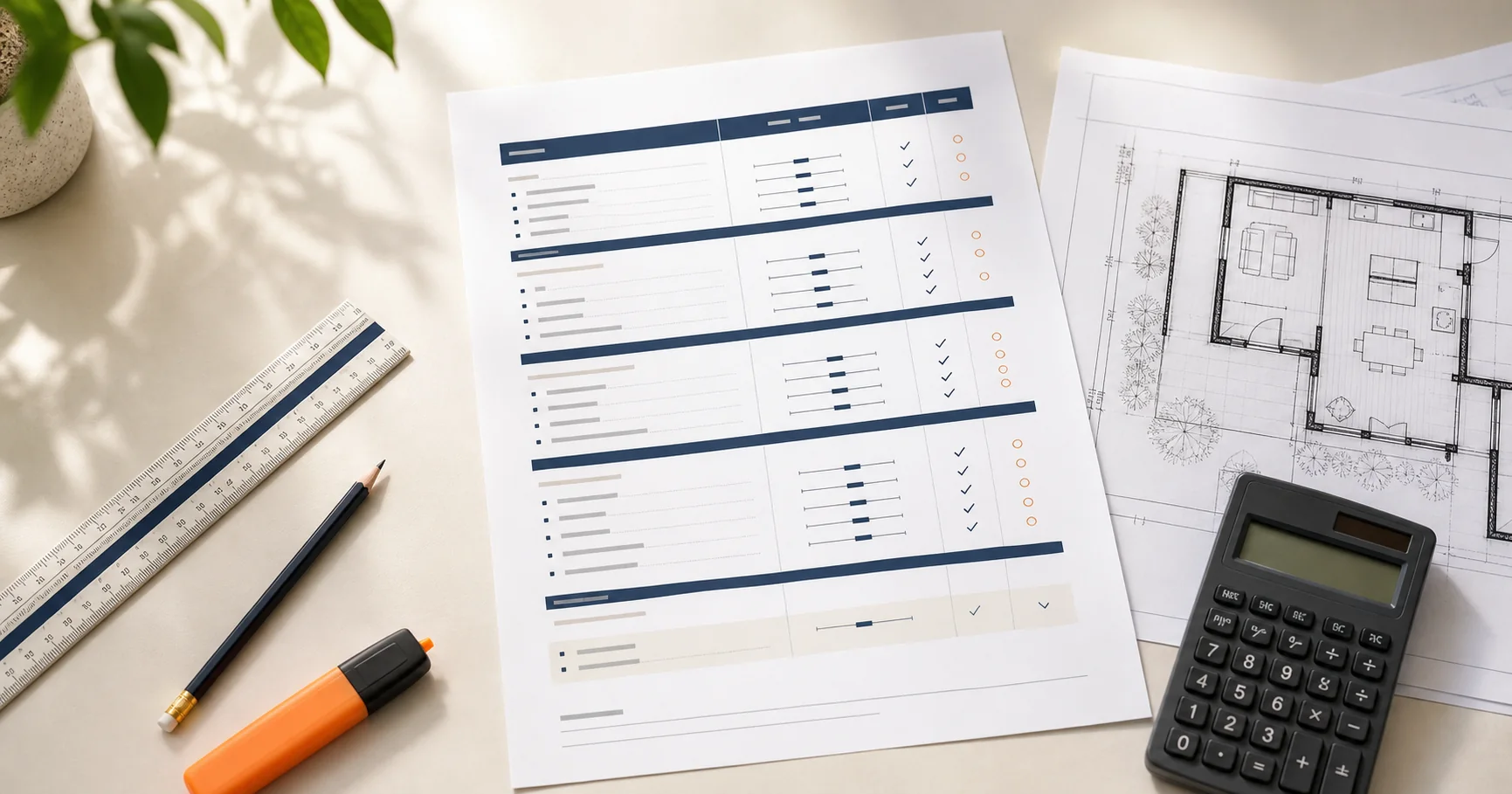
A permit fee report is a planning document, not a bill. This is how we read one before we talk to a city.
Before comparing fee lines, confirm what the property can legally pursue. Start with the 2026 California single-family ADU combination rules for a house or townhouse, or the California multifamily ADU limits under SB 1211 for an existing or proposed multi-unit property. Unit count, construction type, and approval path can change which fees and outside-agency reviews belong in the budget.
Start with the high end
The total is shown as a range because an early project description does not resolve every fee layer. Use the high figure as a planning contingency, not as a City quote. A published building-fee schedule may not include a separate water district, school district, records, technology, or other project-specific charge.
The 750 sq ft line
California Government Code section 66311.5(c)(1) prohibits local development impact fees for ADUs of 750 sq ft or less. Above 750 sq ft, a local agency may charge impact fees proportionately in relation to the primary dwelling. The California HCD ADU Handbook explains the statewide rule and distinguishes impact fees from some other charges. If your design is close to the line, ask the plan checker how the city measures the ADU and which local fee layers fall outside the State-law definition of an impact fee.
Which lines to verify first
- Impact fees — ask for the current schedule, the legal basis for each line, and how the ADU size exemption was applied.
- Utility connections — water or sewer charges may be administered outside the building department. Ask who sets the charge, what project facts trigger it, and when it is due.
- School facility fees — confirm applicability and the current rate directly with the serving school district instead of assuming the City building-fee schedule is complete.
For every line, compare the source title, effective date, calculation basis, and confidence label shown in the report. Our methodology explains how official lines and researched estimates are kept distinct. You can also open the relevant City fee page to inspect the linked government sources before relying on a range.
What to bring to the counter
- The report, printed or on your phone.
- A rough site plan with the proposed floor area.
- Your parcel number (APN), so staff can check zoning and any overlay districts.
Ask whether staff can provide a written preliminary estimate and what assumptions it uses. It is stronger planning evidence than an undocumented phone answer, but it is still not a final invoice: plan changes, valuation, outside-agency charges, and the fee schedule in effect at issuance can change the amount.
Source and review note
This guide was reviewed on August 30, 2026 against the linked California statute and HCD handbook. City fees remain city-specific. Follow the official links on the report, and report a changed or broken source through our correction process.